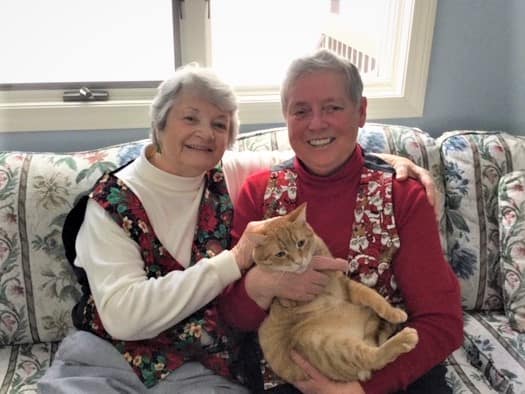
Patricia “Pat” O’Connell’s new book, “We Called Him Al: When The Person You Love Has Alzheimer’s Disease” is now available on Amazon, and I could not recommend it more highly.
It’s a book of love and loss, a book about the chaos and heartbreak that comes with an Alzheimer’s diagnosis, and a story told profoundly and creatively.
I met Pat a little over a year ago, after she had completed her manuscript and needed help editing her work and bringing the book to market. A mutual friend and colleague with the Episcopal Diocese of Western Massachusetts recommended that Pat contact me, and for that, I am grateful.
I appreciate the time I spent working with Pat, the gift that is her book, and the hope in the ongoing relationship I believe we will have.
In We Called Him “Al,” Pat tells the story of her wife, Vivian, the love they shared over many decades, and the loss that began with Vivian’s diagnosis of Alzheimer’s. As they coped with the early symptoms, always united in knowing that their love was stronger than a disease, or even death, they unaffectionately nicknamed Alzheimer’s “Al,” hence the book’s title.
Personally, the book touched me, deeply, at times.
I have great empathy for Pat’s loss, having lost my late husband, Ed, to lung cancer in 2010. I remember well the panic, the chaos, and the disbelief of watching him slip away. (See Divine Renovations.) I also can relate to coping with dementia, given that my mother has been battling it for seven years now.
Pat captures the chaos and the sadness all so seamlessly, and in a way that does not shine a light on her own grief or seek pity. She uses anecdotes, poetry, photographs, and tightly worded, sometimes profound, narrative to bring the reader into her and Vivian’s world.
A deacon in the Episcopal church, Pat also speaks of her belief in a higher power and the comfort that brings to her—and to many.
Professionally, I can see that the book has what it takes to reach people, and touch and transform them when they need it most. There are times when Pat tells stories that inspire empathy. She creates metaphors that left me impressed and at peace, when she’s reflecting on fog, for instance, or the slow death of oak leaves.
Absolutely, I believe Pat achieves the goal of her book, which is to help people facing loss in understanding that death surpasses it. Love continues. Love is stronger.
Please take a look at Pat’s website, DeaconPatUnplugged.com, which my colleague Shannon and I created for her. Poke around there to learn about Pat’s many roles and her grief work, and consider signing up for her daily messages, Deacon Pat “Unplugged,” put out by the Episcopal Diocese of Western Massachusetts. I start my day with these reflections every day.
Find Pat’s book here.
Leave a Reply