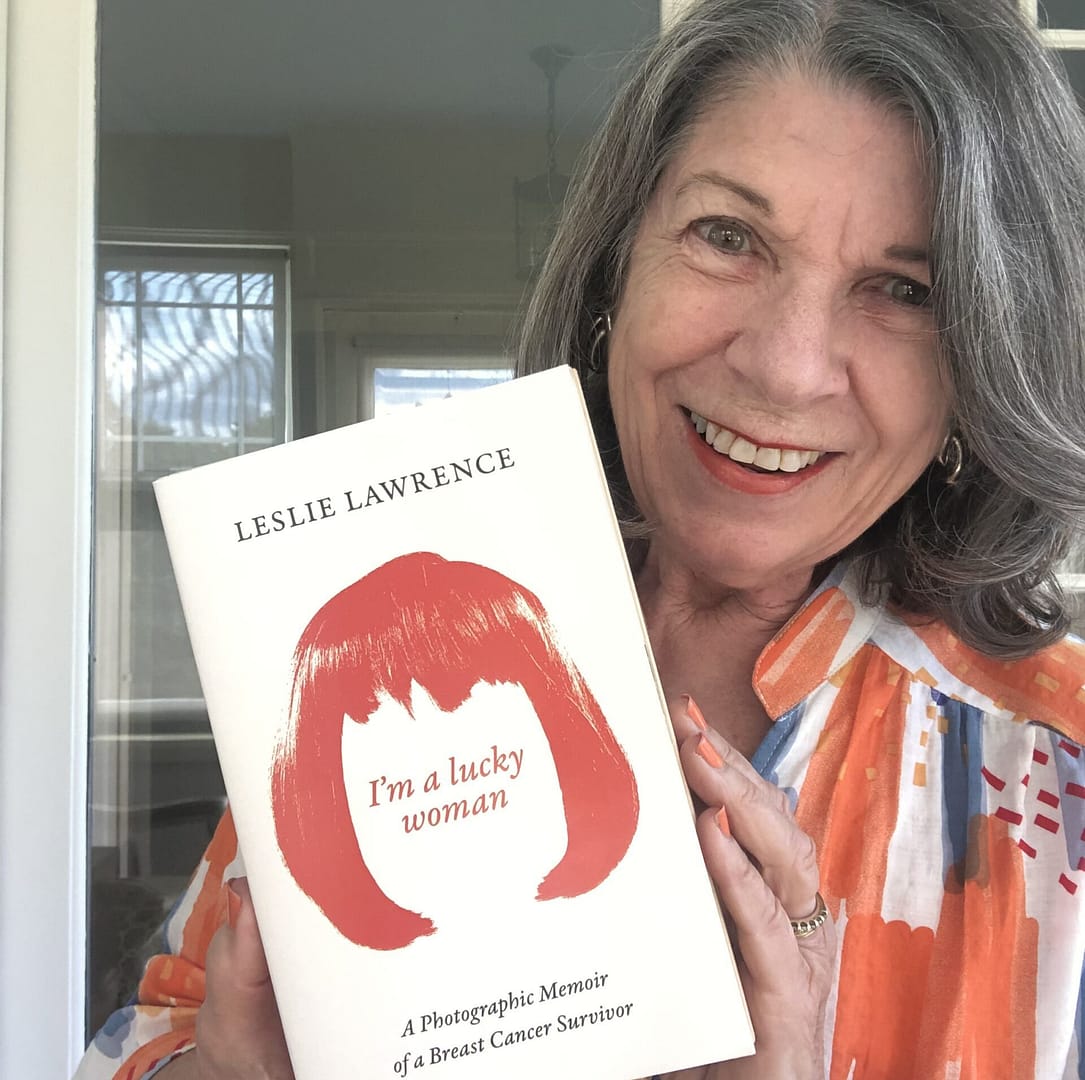
Note: I recently reached out to client Leslie Lawrence for some advice about producing a game. Along with being an author, she has a great deal of experience in marketing games. She and her husband, Ron, talked to me about what it takes to take a game to market, and the story sounded an awful lot like publishing a book. (Basically, good luck finding someone to mass produce it and get it in stores or produce it yourself.) Leslie then shared this blog with me, which I wanted to repost because I love the parallels she draws, and I think it’s quite interesting. Enjoy.
Before I embarked on writing my book, I’m a lucky woman, A Photographic Memoir of a Breast Cancer Survivor, I hadn’t thought much about the similarities between authors and game inventors. Both have great ideas but unless they can find a company to market and sell their ideas or words, their creations just gather dust in the graveyard of unrealized dreams.
As in the toy and game inventing world where there are thousands of new ideas each year, there are many more thousands of books published each year. Trying to find a book publisher is just as difficult as licensing a new idea to a game producer.
The major challenge for authors and game inventors is to get their idea in front of an industry leader who will recognize their concept’s worth, produce it, and pay royalties for the privilege.
Getting a book published
Being a first-time author, I didn’t know a soul in the publishing business. I was at a loss as to what to do. I scoured the library for books that listed literary agents and publishers. I asked everyone I knew if they had a book publishing contact. I sent a gazillion query letters and partial manuscripts to possible agents, publishers and even editors I’d seen on podcasts.
I encountered a lot of unanswered emails. I did get a few memorable responses, “If you don’t hear from us in three months, submit again.” Others stated, “Not viewing manuscripts until 2026!”
Getting a game licensed
For game inventors who don’t know anyone in the toy and game business, their quest to find a home for a new game can be just as daunting. The same path is available to them. Research the acquisition’s person at the toy and game companies or seek out an agent who can evaluate the idea and potentially make a connection with a company where your concept might be a good fit. There are no guarantees.
It all comes down to who you know!
I’ve been a lucky game inventor
I worked for a brief time at Milton Bradley Company and knew some of the players in the industry. My earliest entry into game development started back in 2005 with a call from Bonnie Canner at Cardinal games. She contracted my services to develop the gameplay for a license she had just secured: Are You Smarter Than a Fifth Grader. After working with Bonnie on several more games, I was bitten by the inventing bug and started to invent proprietary games.
To my good fortune I had the privilege of meeting Mary Couzin who after inventing her own toys and games turned her passion to help others connect with industry experts. My husband, Ron Weingartner, and I attended one of her earlier Chicago Toy & Game Fair (CHITAG) where she assembled acquisitions people from all the major toy and game companies in one building. I was able to easily set up appointments with industry experts in one day. I made many lasting contacts that weekend in Chicago. Over the last two decades, I’ve licensed over a dozen games that made it to retail.
Cat•a•gories, my latest game, was just recently licensed to Solid Roots in Tulsa, OK. Lucky for me, Spin Master has acquired the game rights from Solid Roots! Onward and upward with that good news!
And now I am officially a very lucky author
Not because I found a publisher for my book but because I decided to self-publish.
While I’d never encourage a game inventor to manufacturer their own games, (potentially having to dedicate a garage or spare room to store them), I would strongly advise authors to self-publish their books. It ends any long wait for a publisher to put you in the queue. Faster and easier to get your story to market. With POD (Print on Demand) capacity, you can upload your book and within weeks send buyers to order directly from Amazon and IngramSpark, one book at a time. To that I say, “Easy breezy.”
I’m a lucky woman A Photographic Memoir of a Breast Cancer Survivor is available on Amazon.
Leave a Reply